

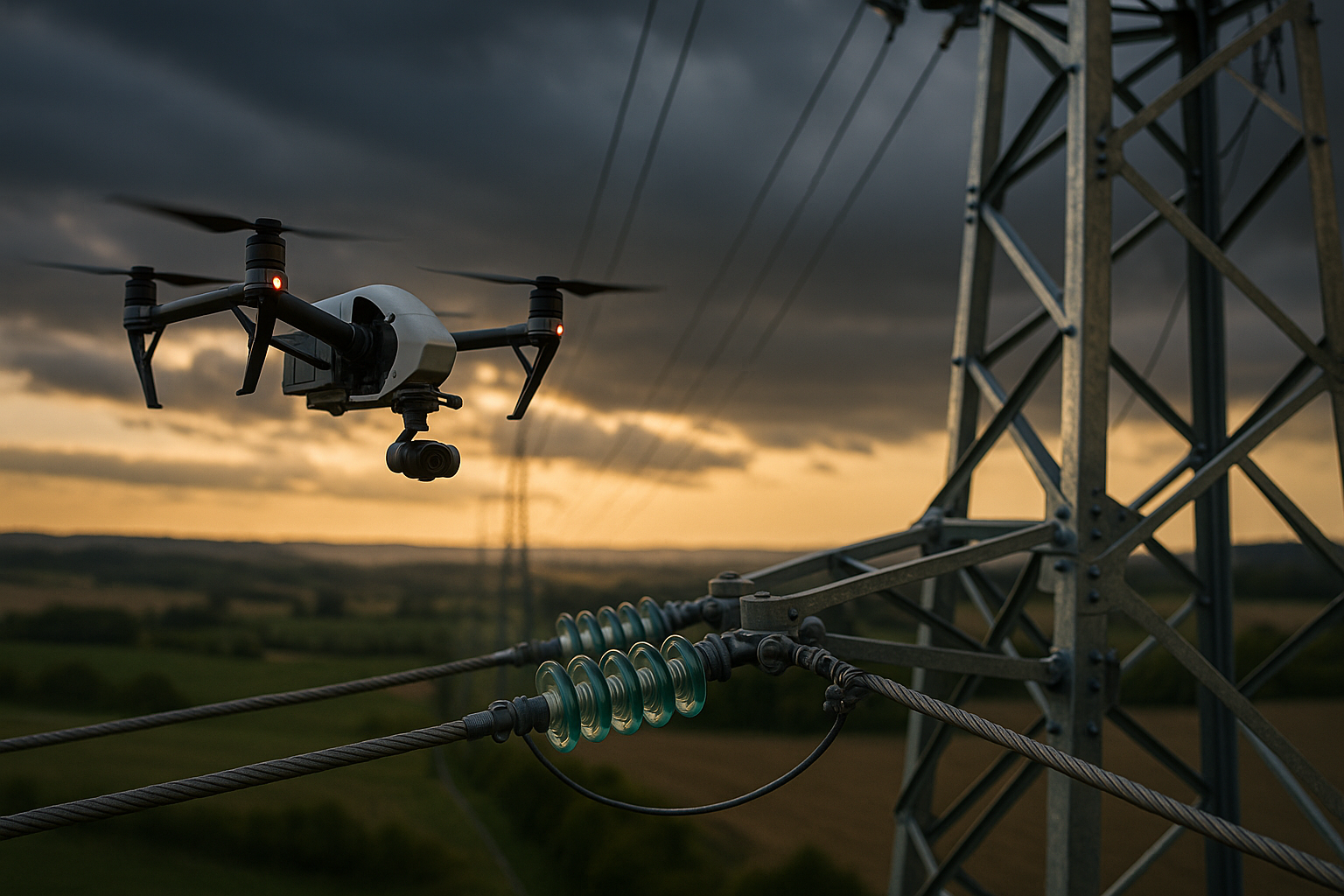
Europe’s electricity network is the backbone of the continent’s energy transition. Millions of kilometres of overhead lines and hundreds of thousands of pylons must be kept in good condition to avoid blackouts and support growing renewable generation. Yet much of this infrastructure is already more than 20 years old. Traditional inspection methods, like sending crews up towers, building scaffolding or relying on helicopters – are expensive, risky and carbon-intensive. Helicopter flights can cost around €150 per kilometre and expose crews to personal danger. As electricity demand rises and climate-driven weather events become more severe, energy companies are searching for smarter ways to keep the lights on, that’s where Predictive Maintenance Drones can make a significant difference.
Why drones make sense for grid inspections
Predictive maintenance drones can fly close to overhead lines and capture high-resolution images, thermal signatures and LiDAR point clouds without exposing workers to heights or live conductors. The benefits are clear: drone inspections are quieter, produce very low CO₂ emissions, and have an excellent safety record. Because drones can approach assets from multiple angles, they often spot defects that manual or helicopter crews miss. Modern automation software also improves productivity. A single pilot can now survey up to three times more kilometres per day than with manual flights, reaching 40–50 km per pilot per day. In 2024, one company inspected more than 60.000 km of European power lines and estimated savings of roughly 500.000 kg of CO₂ compared with helicopter flights.
Cost advantages and image quality breakthroughs
Cost remains a key factor. Europe has roughly five million kilometres of power lines that require regular inspection. Helicopters have traditionally been used because they can carry heavy cameras – but they are noisy, polluting and expensive to deploy.
Long-range predictive maintenance drones, equipped with lightweight sensors and AI-driven super-resolution can now match helicopter-level image quality while reducing inspection costs by up to 90–94%, depending on terrain and weather. These systems use generative models to enhance image resolution from around 5 mm to 2 mm per pixel, enabling the detection of tiny defects such as corrosion, cracks or damaged cotter pins. Higher-quality imagery allows AI algorithms to automatically identify faults, reducing human workload and improving safety.
Europe’s grid operators embrace BVLOS operations

One of the biggest barriers to drone adoption has been the requirement to keep drones within visual line of sight (VLOS). This limits range and reduces efficiency. The UK’s National Grid recently demonstrated a breakthrough by deploying a centralised, autonomous aerial inspection system. From a remote-control room, pilots fly drones beyond visual line of sight (BVLOS) along live high-voltage lines. The system captures optical, thermal and LiDAR data over long distances, enabling the utility to build detailed digital models and plan maintenance more intelligently.
BVLOS operations significantly reduce the need for scaffolding, cherry pickers and manual climbs. They also free up helicopters and specialist lineworkers for tasks where they are truly needed. The result is faster, safer and more sustainable inspections.
Regulators are taking notice that. The UK Civil Aviation Authority’s 2024 policy update allows drones to operate BVLOS at low altitudes near infrastructure corridors where other aircraft rarely fly. This regulatory shift makes the UK a leader in commercial drone operations and shows how innovative policymaking can unlock large-scale deployments across Europe, bringing predictive maintenance drones closer to everyday’s operations.
From inspection data to predictive maintenance
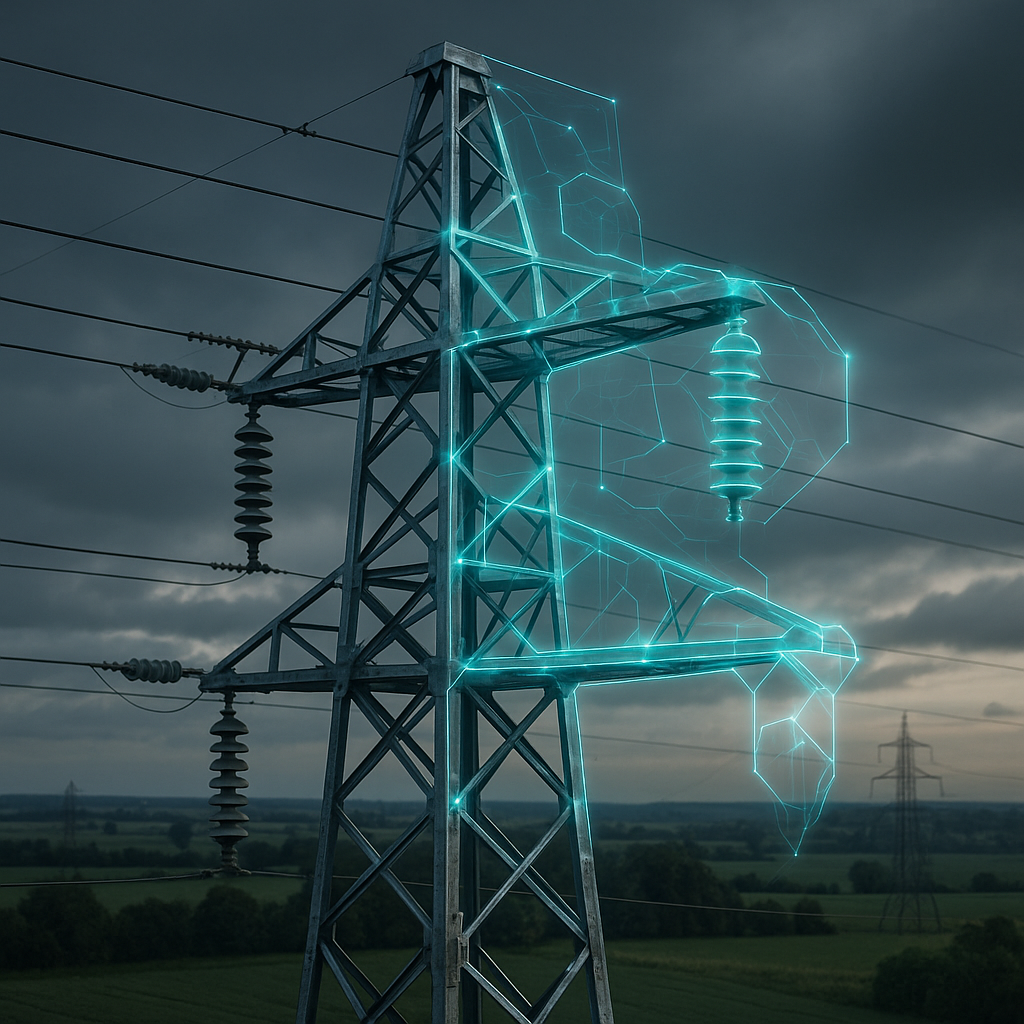
Drones are used to collect high-quality data is only the first step. The real value emerges when images and sensor data are analysed by AI to detect faults before they become failures. Machine-learning models transform raw imagery into actionable insights, enabling predictive maintenance that boosts network resilience. Thermal sensors can identify hotspots on conductors or insulators. LiDAR and photogrammetry can map vegetation encroachment, sagging lines and structural deformation.
Predictive maintenance drones are also expanding into other energy sectors. For example, data-driven drone inspections of wind turbines can reduce costs by up to 65% and cut inspection time by around 50%, saving several hours per turbine. In oil and gas, similar methods for pipelines and refinery pipe racks have delivered up to 60% cost reductions while completing inspections far more quickly than manual approaches.
A greener, more reliable grid
Predictive maintenance drones align strongly with Europe’s wider climate and energy goals. Drones generate a fraction of the emissions and noise of helicopters, saving around 10 kg of CO₂ per kilometre of power line inspected. Centralised BVLOS systems show that vast networks can be monitored remotely while still capturing rich, high-resolution data.
As Europe doubles its investment in grid infrastructure to meet climate targets, drone-enabled predictive maintenance is becoming essential. By identifying problems early and scheduling repairs proactively, utilities can prevent outages, extend asset life and minimise costly emergency callouts. The combination of autonomous drones, advanced sensors and AI promises a safer, greener and more reliable energy system for Europe.
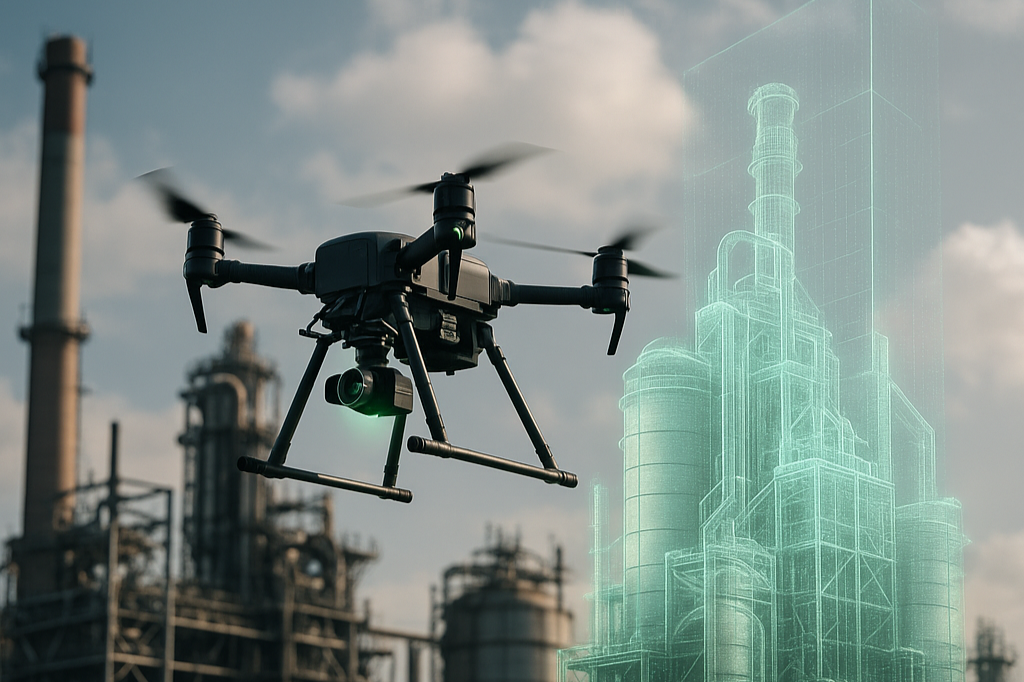
Drones gather high-quality data efficiently and safely. Digital twins use that data into live operational intelligence, moving towards ESG excellence.
Robivon – Engineering Europe’s autonomous future