
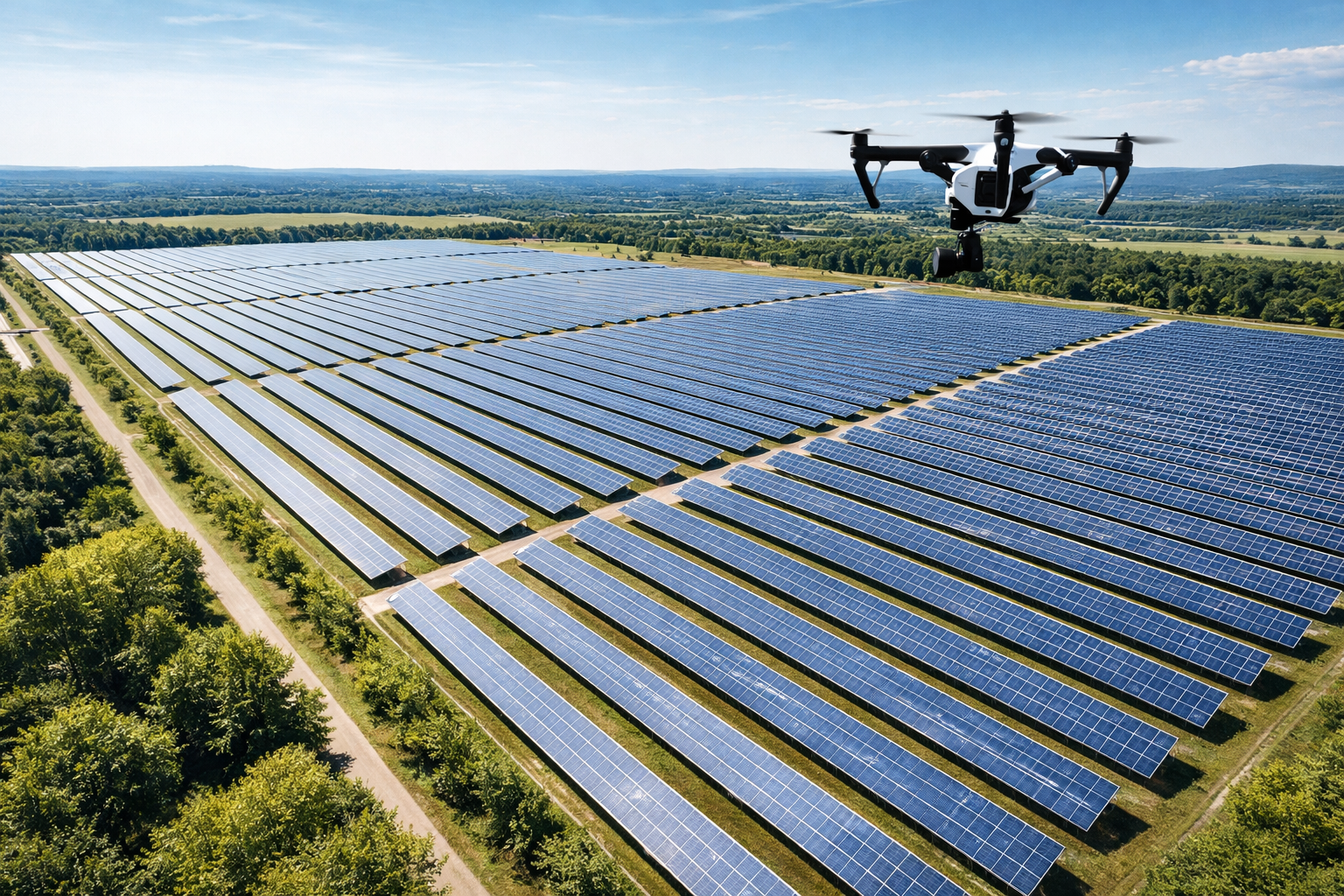
Drone inspections have become common across the solar industry. They allow operators to quickly scan large sites and detect issues that would be difficult to identify from the ground.
With a single flight, it is possible to review thousands of modules and highlight potential thermal anomalies across an entire park.
However, once the drone has completed its mission, another challenge begins: turning inspection data into maintenance decisions.
The reality of operating large solar parks
Utility-scale solar parks are complex assets. A typical installation may contain tens of thousands of modules, multiple inverter stations, and extensive electrical infrastructure.
Over time, a variety of issues can appear across the site, including:
- module hotspots
- connection problems
- damaged components
- localised performance losses
Drone inspections are extremely effective at revealing these anomalies. But identifying them is only the first step.
The real challenge lies in understanding what the findings mean for daily operations.
Data alone is not enough
Many drone inspections produce large datasets. Operators may receive hundreds of thermal images or lists of detected hotspots across the site.
While this information is useful, it often lacks the structure needed for practical maintenance planning.
For example, an operations team may still need to determine:
- which anomalies are most critical
- where exactly they are located within the park
- how many modules are affected
- whether the issue requires immediate intervention
Without this context, teams must spend additional time reviewing the inspection results before they can act on them.
From detection to prioritisation
For solar park operators, the most valuable inspection outputs are those that help prioritise maintenance work.
Instead of simply identifying anomalies, inspection results should help answer practical questions such as:
- Which issues should be addressed first?
- Which problems can wait until scheduled maintenance?
- Are certain anomalies appearing repeatedly across inspections?
When findings are organised in a clear and structured way, maintenance teams can quickly move from inspection to action.
This reduces the time spent reviewing data and improves the efficiency of operations.
Clear location matters
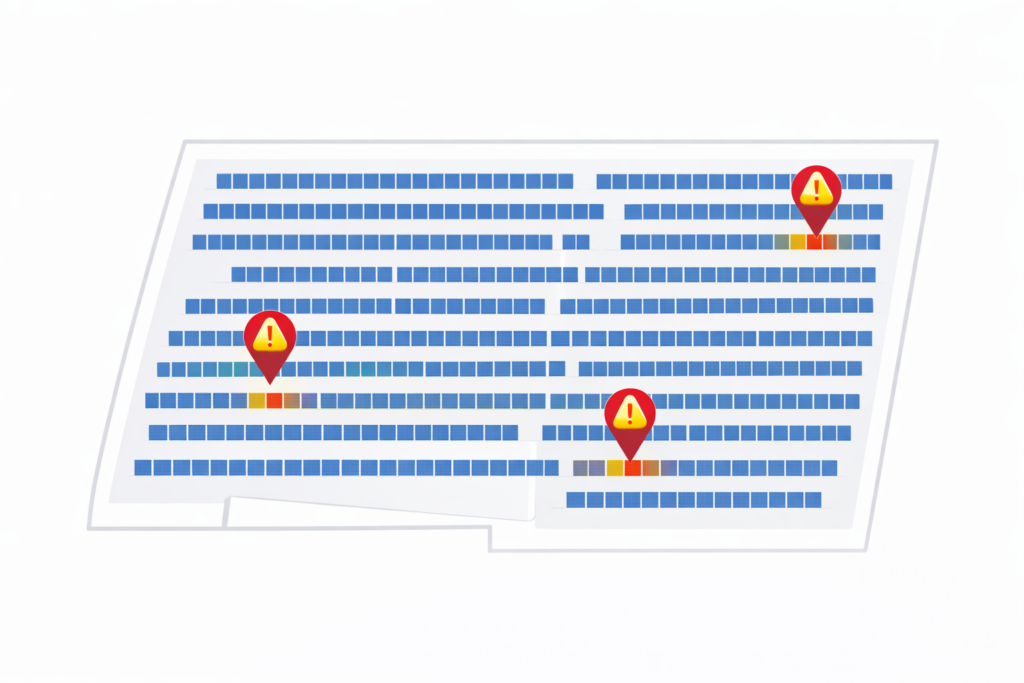
One of the most important aspects of a useful drone inspection result is to provide accurate location information.
When anomalies are clearly mapped within the park, operators can quickly identify the affected area and plan corrective actions.
This is particularly important in large installations where thousands of modules are distributed across multiple sections of the site.
Without clear location references, even simple maintenance tasks can become unnecessarily time-consuming.
Tracking issues over time
Drone inspections become significantly more valuable when they follow a consistent workflow.
When anomalies are recorded in a structured way, operators can compare findings across multiple inspection cycles.
This allows them to understand whether a particular issue is:
- new
- recurring
- already resolved
Over time, this creates a clearer picture of how the park is performing and where potential risks may be emerging.
A more operational approach to drone inspections
As solar parks continue to grow in size, drone inspections are gradually becoming more operational in nature.
Operators no longer need only images of their assets. They need clear information that supports daily decisions and long-term maintenance planning.
This shift is changing how inspection workflows are designed.
Instead of focusing solely on data collection, the goal is increasingly to deliver results that help teams manage their assets more effectively.
When inspections are structured with operations in mind, they become a practical tool for maintaining performance across large solar portfolios.
Check our PV Evidence Pack to see our approach to solar parks inspection.

Drone inspections and thermal imaging have transformed how solar parks are monitored. Large sites can now be scanned quickly, allowing operators to detect potential issues across thousands of modules in a short amount of time, however, keeping humans-in-the-loop remains essential to ensure data accuracy and usefulness.
Robivon – Engineering the transition from inspection to autonomous infrastructures