
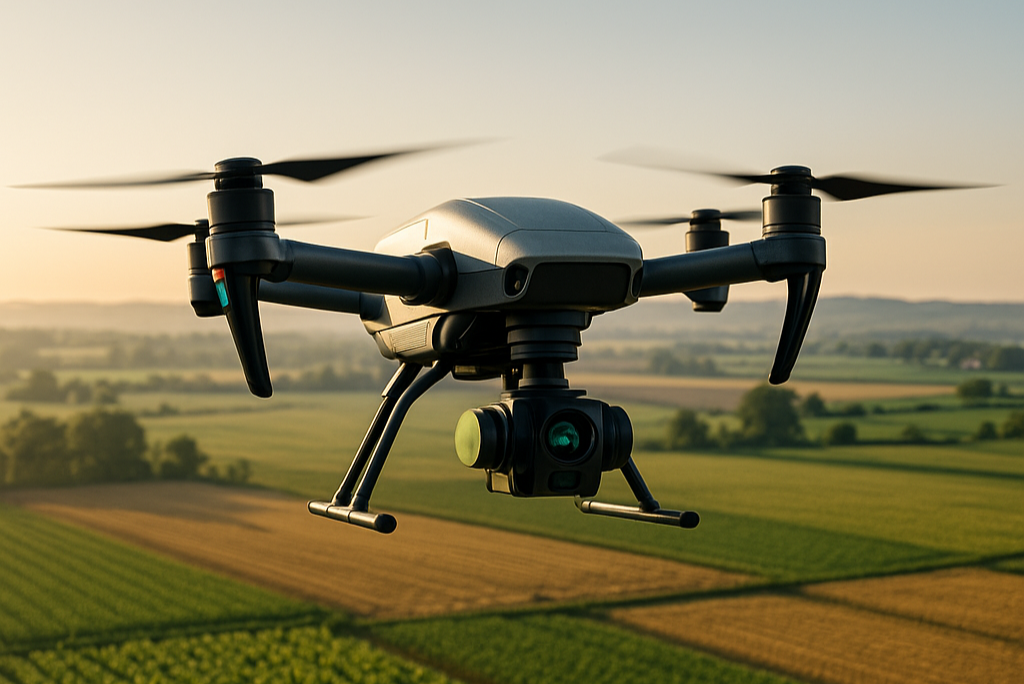
Europe’s farms face growing pressure from multiple fronts. Labour shortages make it difficult to meet rising food demand, while chemical pesticides harm ecosystems and are becoming increasingly restricted. The European Commission aims to halve the use and risk of chemical pesticides by 2030. At the same time, climate change and soil degradation require more resilient agricultural practices. To meet these challenges, European innovators are turning to drones and robotics for smart farming & precision agriculture: technologies that monitor crops, identify weeds and apply inputs only where needed.
Precision Weed Control: Saving Inputs and Protecting Soils
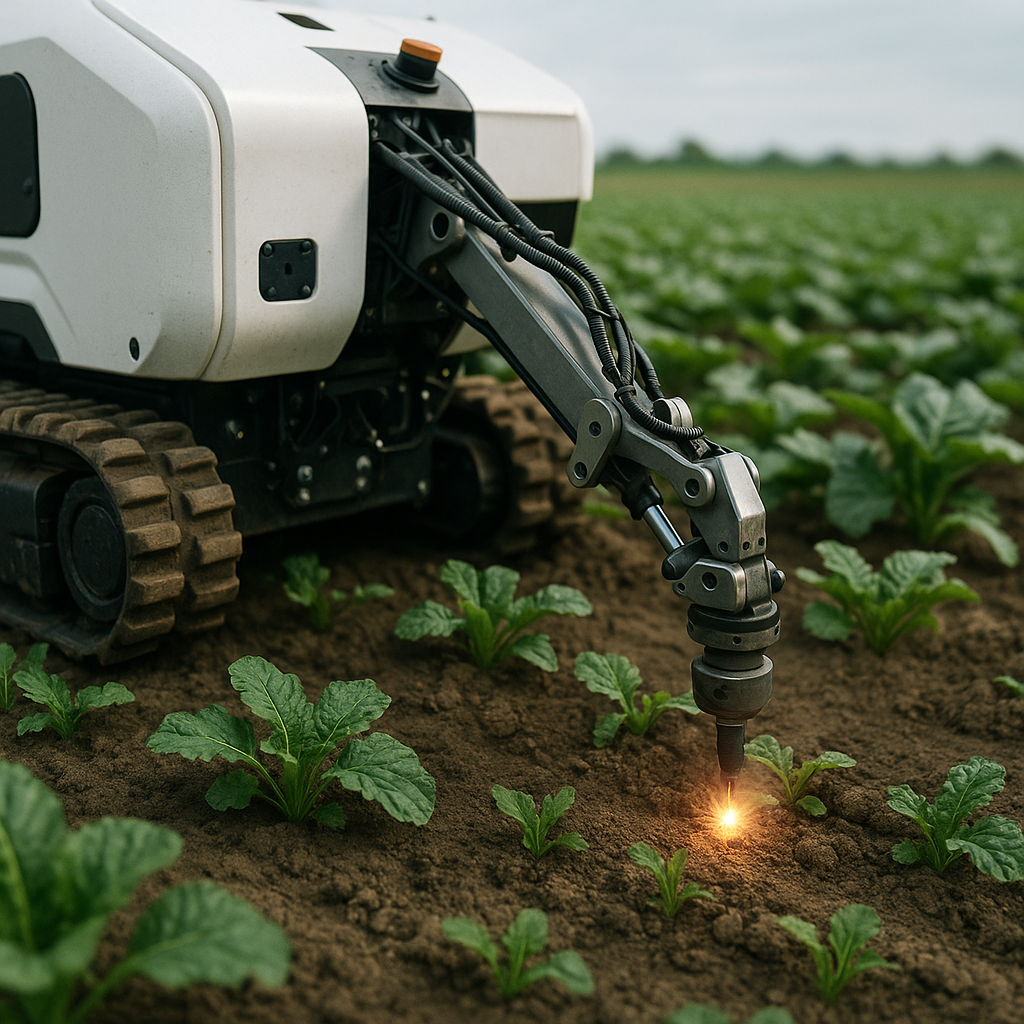
One of the most promising applications of smart farming using agricultural robotics is precision weed control. Conventional herbicide spraying blankets entire fields, wasting chemicals and accelerating herbicide resistance. Precision systems allow farmers to target only the weeds and leave crops untouched.
Research shows that drones can detect weed infestations in crops such as maize, sunflower, olive and poplar. Using object-based image analysis, researchers categorised weed-infestation levels with around 85–86% accuracy. This approach can reduce farm costs by 15–35% and cut chemical use by 20–30%.
Robotics is also transforming dairy pastures. Guided by Europe’s Galileo satellite navigation system, autonomous robots equipped with electrical or laser weeders can identify individual weeds, record their GPS position and then return to eliminate them. This technology reduces manual labour, improves grassland quality and supports organic or herbicide-free production systems.
Combined with smart-spraying systems that adjust chemical application based on weed density, precision weeding can drastically reduce chemical inputs and bring farmers closer to the EU’s pesticide-reduction targets.
Advanced Weed Recognition: High Accuracy with Machine Vision
The success of precision weeding depends on accurately distinguishing crops from weeds. Smart farming using machine-vision and AI-driven classification models have made remarkable progress. A review of image-analysis approaches found that convolutional neural networks and discriminant-analysis models can achieve accuracies above 90%, and in some cases up to 98–100% for specific crops.
For example, models reached 99% accuracy in barley and 98% in wheat. In one deployment, a machine-vision sprayer distinguished between grass leaves and maize with more than 90% accuracy. These high levels of precision make targeted treatments possible, reducing herbicide drift and protecting beneficial plants.
Drone‑Based Crop Monitoring: Early Detection of Stress and Yield Optimisation
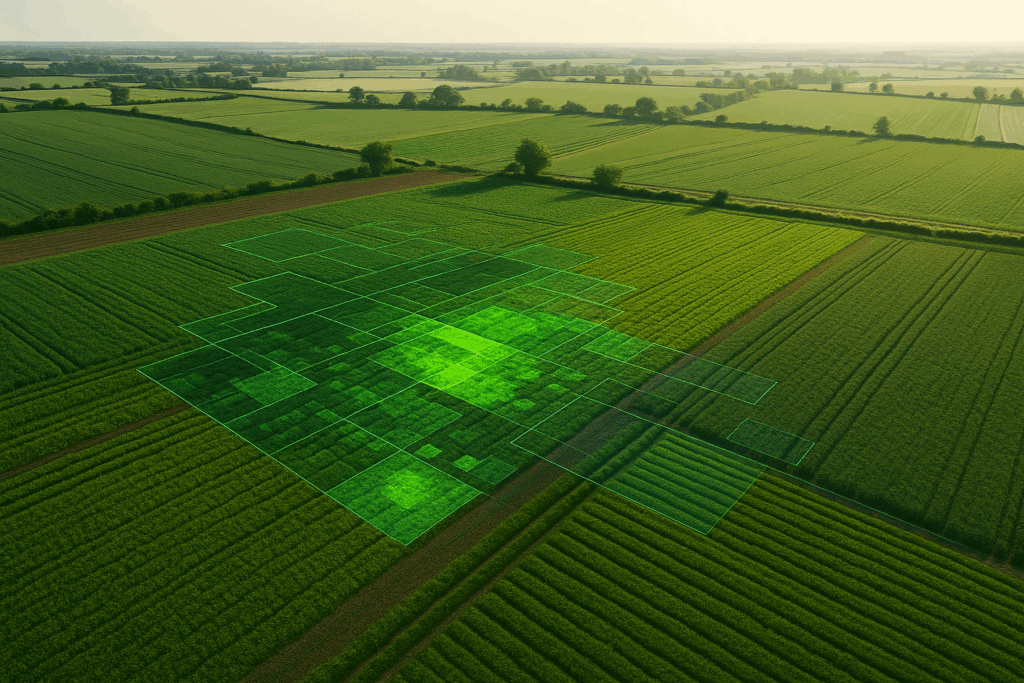
Using drones for smart farming is not limited to weed control, they can also be powerful tools for monitoring crop health. Multispectral, hyperspectral and thermal sensors capture high-resolution data on canopy temperature, chlorophyll levels and soil moisture. This enables farmers to detect nutrient deficiencies, water stress or disease long before symptoms appear.
By integrating drone data with machine-learning models, farmers can optimise irrigation schedules, fertilizer application and pest management. This leads to healthier crops, higher yields and lower environmental impact. The EU’s Farm-to-Fork Strategy emphasises integrated pest management and efficient resource use. Drone-enabled, AI-driven analysis empowers farmers to make data-driven decisions, conserve water and chemicals, and increase resilience to climate pressures. Early stress detection ensures interventions are applied only where necessary, minimising waste.
Human‑Friendly Robotics: Helping Farmers Focus on High‑Value Tasks
Contrary to fears that machines will replace humans, agricultural robots are designed to complement farmers. The European CAP Network notes that robotics and AI enable precise operations and free farmers to focus on high-value tasks such as crop management, strategy and quality control. Robots take over repetitive or physically demanding work, like mechanical weeding or targeted spraying, while humans handle decision-making.
Advanced navigation systems such as Galileo ensure robots operate safely and accurately in open fields.
Aligning with Europe’s Green Deal and Horizon Funding
The EU’s push to reduce pesticide use is part of the wider European Green Deal, which aims to restore biodiversity and build resilient food systems. Smart farming and precision agriculture technologies, from targeted weeding to drone-based monitoring, support these goals by drastically reducing chemical inputs and soil disturbance.
These innovations are strongly aligned with Horizon Europe priorities. Projects advancing AI-enabled crop monitoring, autonomous field robotics or environmentally friendly weed management are well positioned for research and innovation funding.
Conclusion: Toward a Sustainable Food System
Smart farming with drones and robotics is no longer futuristic. Across Europe, drones are mapping weed infestations, robots are eliminating weeds with lasers or electricity and machine-vision models are distinguishing crops from weeds with over 90% accuracy, and up to 98–100% in specific cases. These innovations are already delivering tangible results: up to 85% reductions in herbicide use, 15–35% lower costs, 20–30% lower chemical inputs, and early detection of crop stress long before it becomes visible.
As Europe strives to halve pesticide use by 2030, precision agriculture will be a key ally. By adopting drone and robotic systems, farmers can protect the environment and public health while increasing productivity and profitability. The future of European agriculture is smart, precise and sustainable.
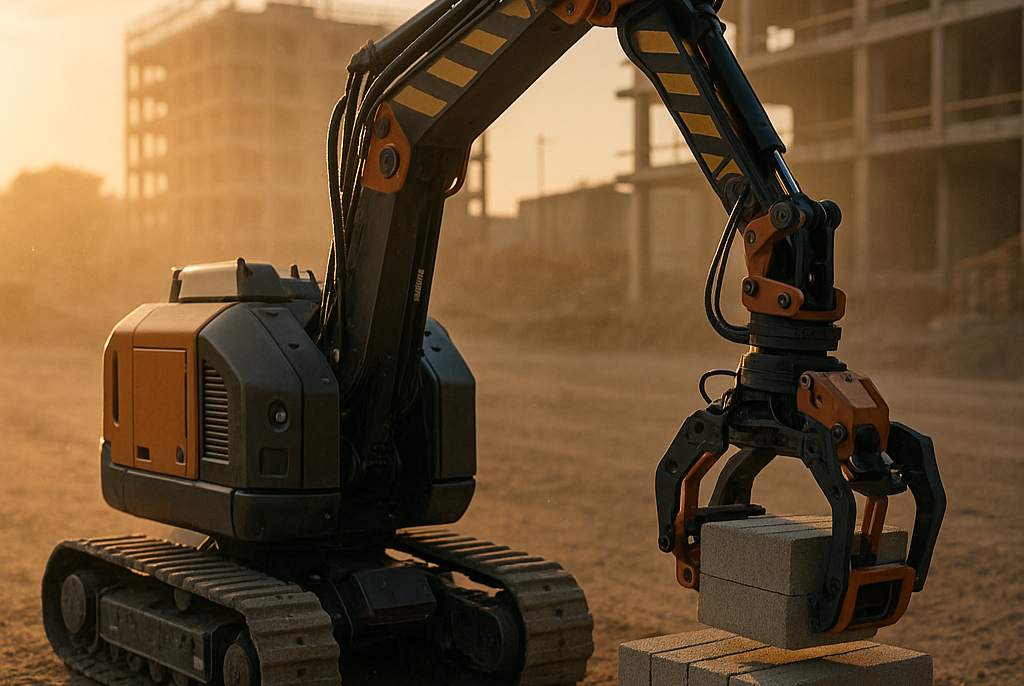
Autonomous construction robots across Europe, robots are printing houses, laying bricks, steering heavy machinery and assisting workers.
Robivon – Engineering Europe’s autonomous future